

Lighting Kit for wedding photography, Part 3: Couples and Families,
A guide on how to use off camera flash during wedding days

Flashgear.net logo
The part you have all be waiting for. The end of the trilogy. Hopefully, after reading this 3 part blogs about lighting equipment for wedding photography, you will be better prepared for your upcoming seasons. Better prepared, more confident that no challenge intimidates you.
As usual, lets start with start with a list of my OCF kit that bring to every wedding, as well as a link to my favourite OCF supplier.
1- Two Godox V1 pro Speedlights Click here
2- Two AD200 pro Click here
3- One AD400 pro Click Here
4- One 34” Quick Octabox the works as a soft box as well as a Beauty dish since it has a beauty dish plate Click Here
5- One 75” ULM Silver reflective umbrella Click Here
6- Three Heavy Duty Air cushioned Light Stand Click Here
7- One Godox Xpro II Controller Click Here
There’s a lot more equipment you can use, like small diffusers for your speed lights and AD200’s, just go to www.flashgear.net and have fun shopping.
Now, on to the fun part. Let’s start with lighting equipment for when I am taking pictures of the couple. Please keep in mind that I do what can be called as hybrid shooting, meaning I will use OCF for more editorial type of posing (Outside or inside), and also if I have to shoot indoors because of weather conditions for example. I will then switch for natural light only for a more casual type of shoot, candid images where the couple is just having a good time.
My go to lenses for when I am taking pictures of a couple, is a 85mm Sigma Art 1.4, for close ups, and a 14mm Canon prime for wide angle shots. Occasionally I might use a 50 mm, but most cases, just the one mention before.
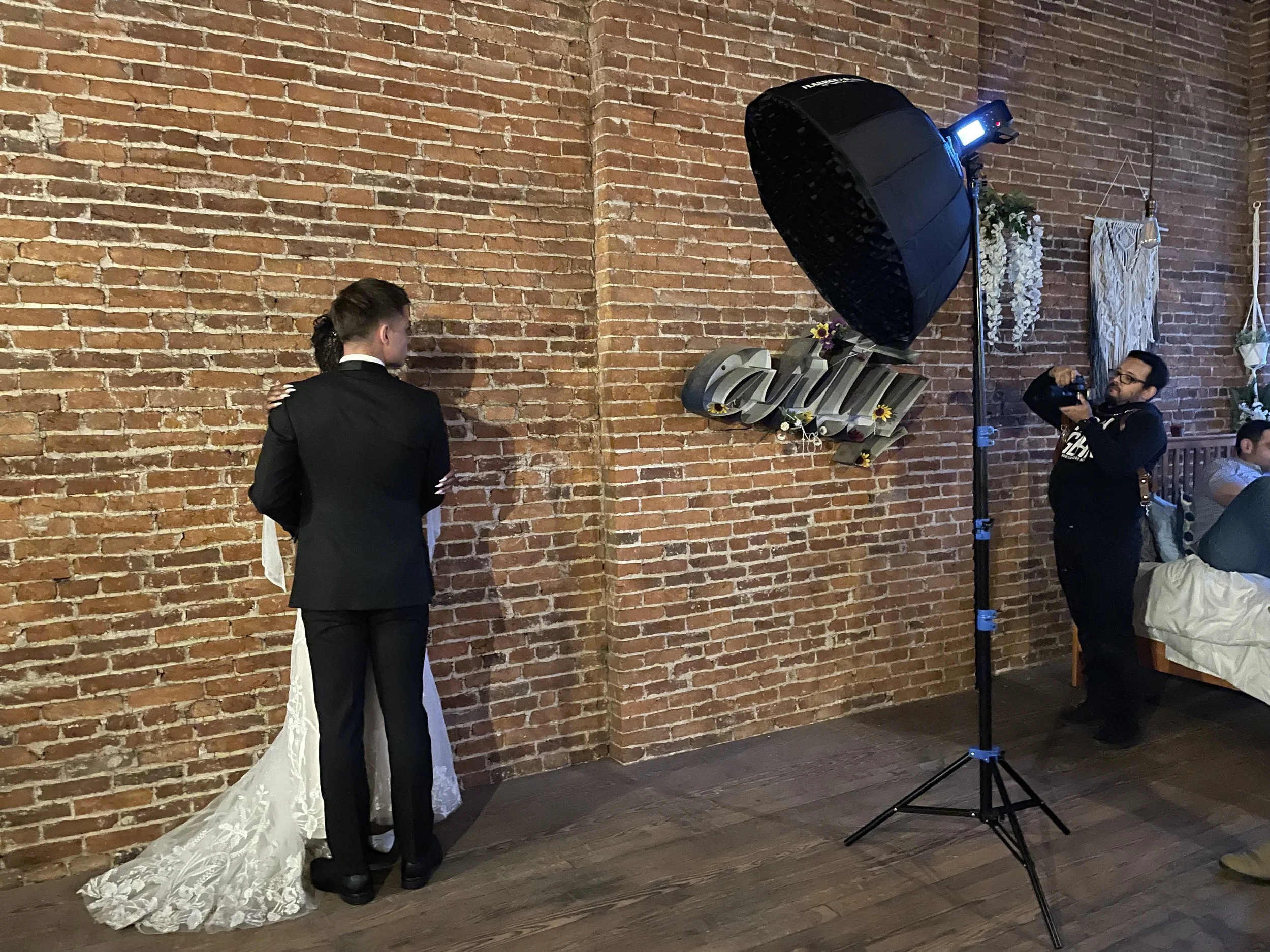
Behind the scenes image from our wedding photography workshop, with the AD400 pro with a 34” quick octabox
Regardless of what lens I am using, my choice of light is always the same. a AD400pro, and a 34” diffuser, in this case a Quick Octabox that works both as a soft box or a Beauty Dish. View link to Item number 4 in the list above.
The AD400 is a powerful strobe that allows me to over power the sun, wether I am shooting at F16, ISO100, or at F2 ISO 100 and a shutter speed of 1/1000 for example.
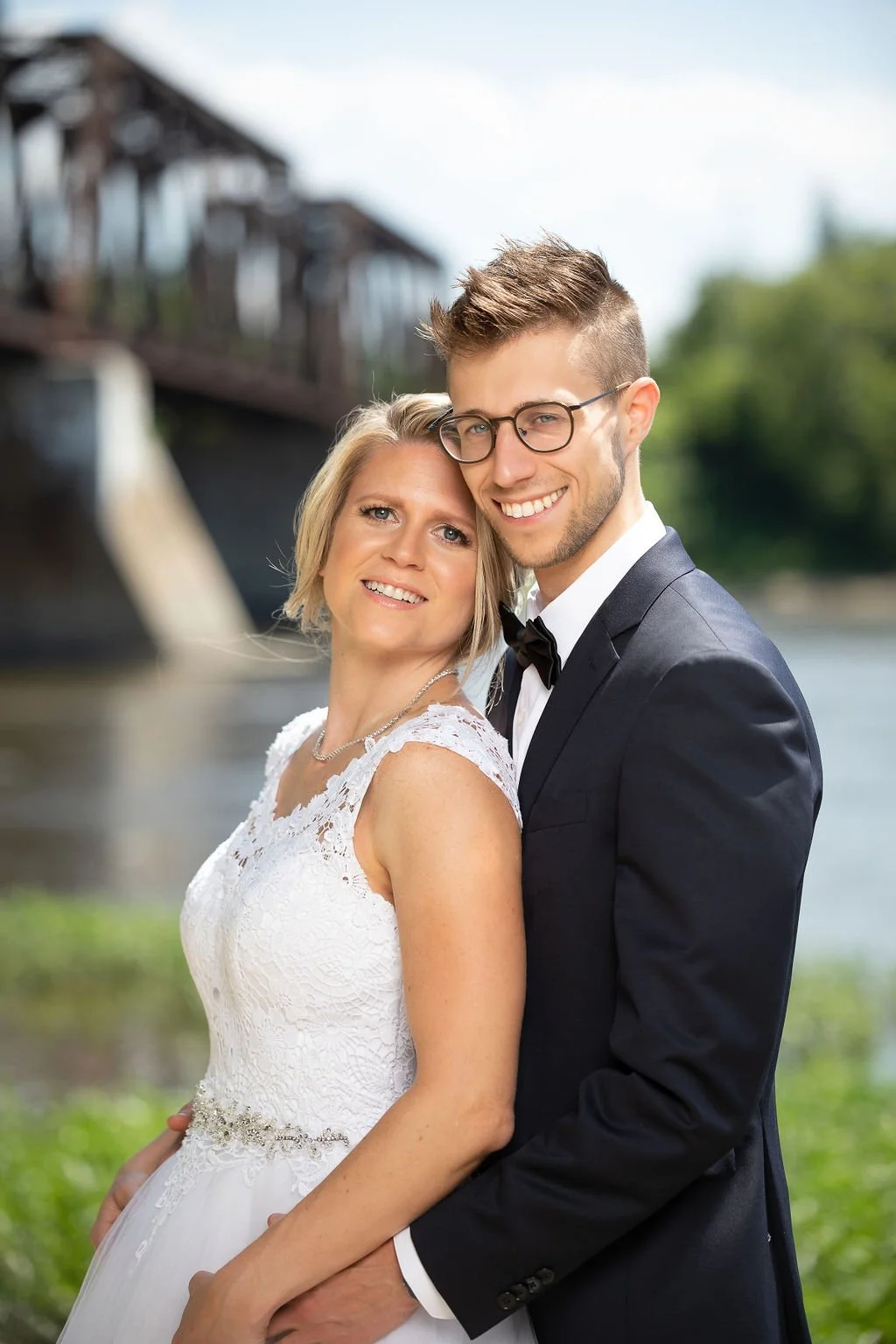
Wedding portrait shot at F2.8 to blur the background, using High sync speed to lower the amount of light coming in.
F2.8
Shutter speed of 1/800
ISO 100
With the 85mm lens, I usually shoot wide open, at F2, taking full advantage of my strobe in bright sun light conditions, as it allows me to use High Sync Speed to blur the background without exploding the highlights.
What’s High Sync Speed? Most cameras have a limited sync speed with your flash. From 1/160 to 1/250 depending on the model. A strobe with HSS allows you to shoot with a faster shutter speed, to compensate for the fact that your lens is wide open, at F2, which means there’s allot of light coming in. So you have to compensate right? How? By lowering your ISO and increasing your Shutter speed.
With my 14mm wide angle lens, I am shooting a wide angle image. I will use this lens if the architecture around us is worth it, or if we have a beautiful blue sky or a spectacular sunset. Bottom line is, I want a wide frame, and I want all of it to be in focus, a high contrast and vibrant image. So, I increase the Fstop to values F7 or above, depending on how much available natural light there is.
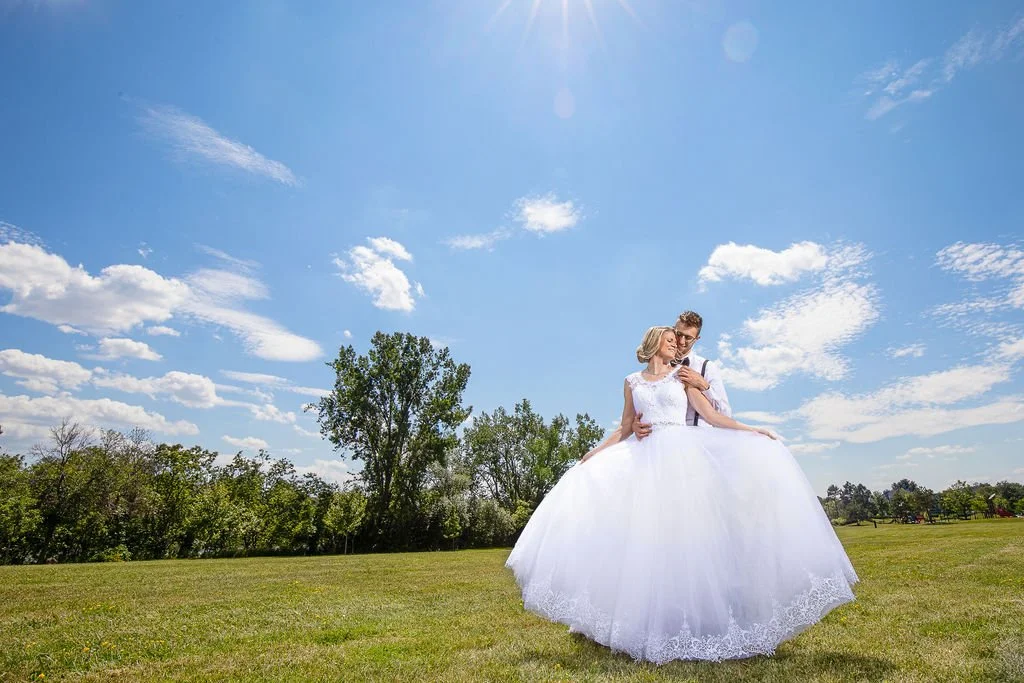
Wedding portrait shot at F16 for a more contrasty image, shot at F16 to have all of the frame in focus, and save the background details.
Settings:
F16
Shutter speed of 1/200
ISO 200
What you need to understand is that in both scenarios mentioned in the two paragraphs above, you are minimizing the amount of natural light coming thru your lens, usually to keep highlights from being way too high, and you need a strobe that is powerfull enough to lit up your couples, and a diffuser that will help you from making your couples look “ Too flashy “. you still with me?
Good.
Now, the other part of this blog. The family formals.
Some of you might not know this but the family formals are one of the most important parts of a wedding day. Those will be some of the couple (And their families) favourite pictures. Those are the images that the couple and their families will print and put on walls or frames by the night table, dresser, office, etc. So it’s extremely important you get this right.
A wedding day, or any other event like a Baptism, a Bar Mitzvah, a confirmation, a sweet 16 or a quincinera, is run, run, run, right? You’re on the go and there’s not time to be setting lights and sift boxes, to get that pitch perfect exposure right?. Well, you can do the next best thing, which is what I do, religiously, for every single wedding that I shoot.
Again, the one and only AD400 pro, and a 75” reflective umbrella. Now, feel free to use anything you want, but this bad boy is the easiest thing to assemble and take down. It opens and closes like a normal umbrella. Because of how big it is, it throws more than enough light to lit up a group of 4 or a group of 30 people. Believe me, i’ve done it, many times. I’ve use it for when I am shooting family formals inside churches, synagogues, reception halls, or if it’s outdoors and I dont want to blow out the background that is exposed to ambient light. Keep it simple. It’s a wedding day, there is a schedule. You want to take perfectly exposed family formals, with equipment that allows you to be fast, without loosing quality in your final product.
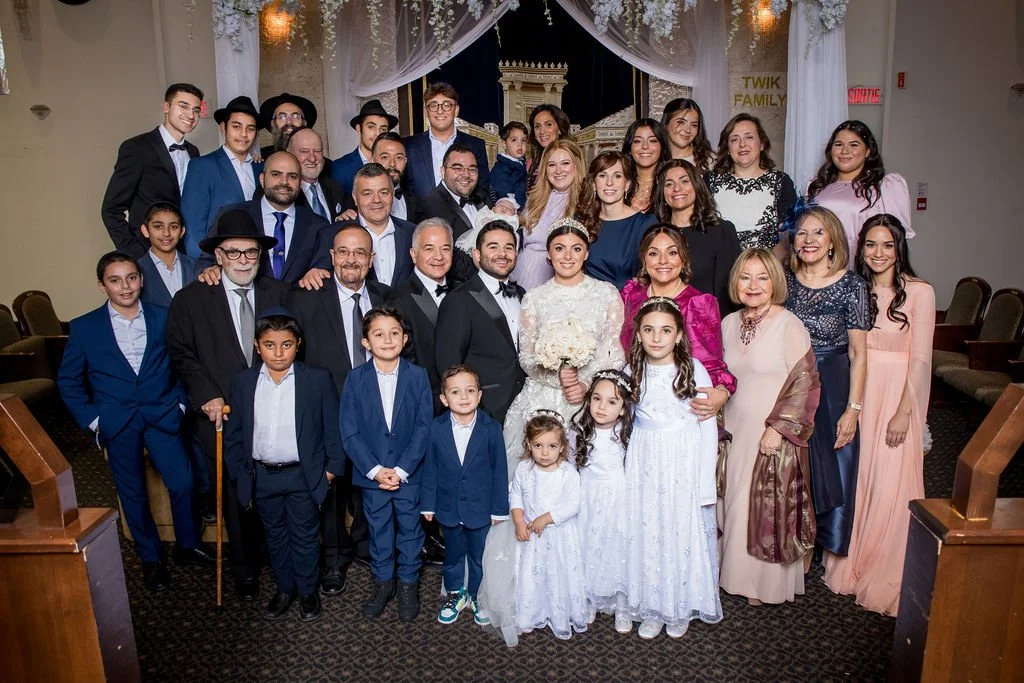
Big family portrait during a wedding day, using a AD400 and a 7 foot reflective umbrella
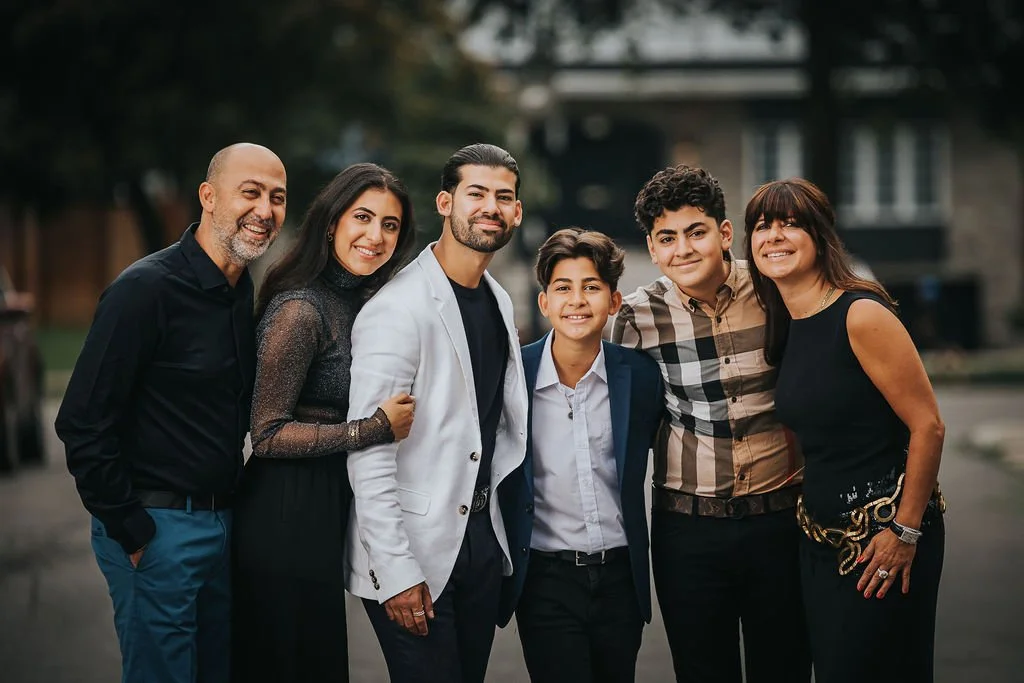
Family portrait shot before a Bar Mitzvah party, outdoors, using a AD400 pro and a 7 foot reflective umbrella
There you go folks. The last episode of my “lighting kit for wedding photographers “.
If you want to see more of my work, go to www.instagram.com\rochastudio
if you want to learn more from me, join my group join Facebook, by clicking here
And don’t forget to check all my other educational blogs, past and future ones, and also stay tuned for news on future workshops.
Happy shooting

Lighting Kit for wedding & Bar Mitzvah photography part 2: Reception halls
A guide on how to use Off camera Flash on reception halls
On 3 part blogs, I will dive into my personal preference for what Off Camera Flash (OCF) equipment I use for a full wedding day, as well as how I use it considering a full wedding day presents different scenarios and lighting situations. This one is part 2 of 3, with the third one coming next week.
remember, there are more than one way to achieve results. Different photographers will use different equipment and methods, this is just what works for me.

Flashgear logo
Lets start with a list of my OCF kit that bring too every wedding, as well as a link to my favourite OCF supplier.
1- Two Godox V1 pro Speedlights Click here
2- Two AD200 pro Click here
3- One AD400 pro Click Here
4- One 34” Quick Octabox the works as a soft box as well as a Beauty dish since it has a beauty dish plate Click Here
5- One 75” ULM Silver reflective umbrella Click Here
6- Three Heavy Duty Air cushioned Light Stand Click Here
7- One Godox Xpro II Controller Click Here
There’s a lot more equipment you can use, like small diffusers for your speed lights and AD200’s, just go to www.flashgear.net and have fun shopping.
Now, let’s get to the fun part. What do I use all these lights for, during the reception?
Let’s start with understanding that a full wedding day, or a Bar Mitzvah celebration, presents different challenges lighting wise. For reception halls, I use the exact same principal for weddings and for Bar Mitzvah parties. The exact same one. Every building is different, but the principals and equipment are exactly the same
For example, halls can be very dark with brown wood walls, same as barns, or they can be very bright with big windows and white walls. You gonna find halls with low ceilings, or very high ceilings. So be prepared and having proper equipment is key.
How to approach this?
That’s when OCF comes in handy.
Lets start with understanding what equipment am I using during the parties.
Always two cameras, each with a speedlight on it.
Click on a video below for a quick demonstration from a real Bar Mitzvah party.
One of the cameras uses the speedlight only, with high ISO. This is for proximity portraits, for example, when I am down in the middle of the crowd taking candids or portraits looking at the camera. The speedlight mixed with high ISO allows me to properly expose who’s in front of me and save ambient light. Occasionally I will also get some wide angle shots with this setup.
What’s the settings on this camera? Well, they may vary, but the Fstop is always between F2 and F4, never above F4. Shutter speed between 1\125 and 1\160, maybe sometimes 1\200. And ISO never below 2000 or 3200 if there’s no natural light available. My last Bar Mitzvah party, my ISO was at 5000.
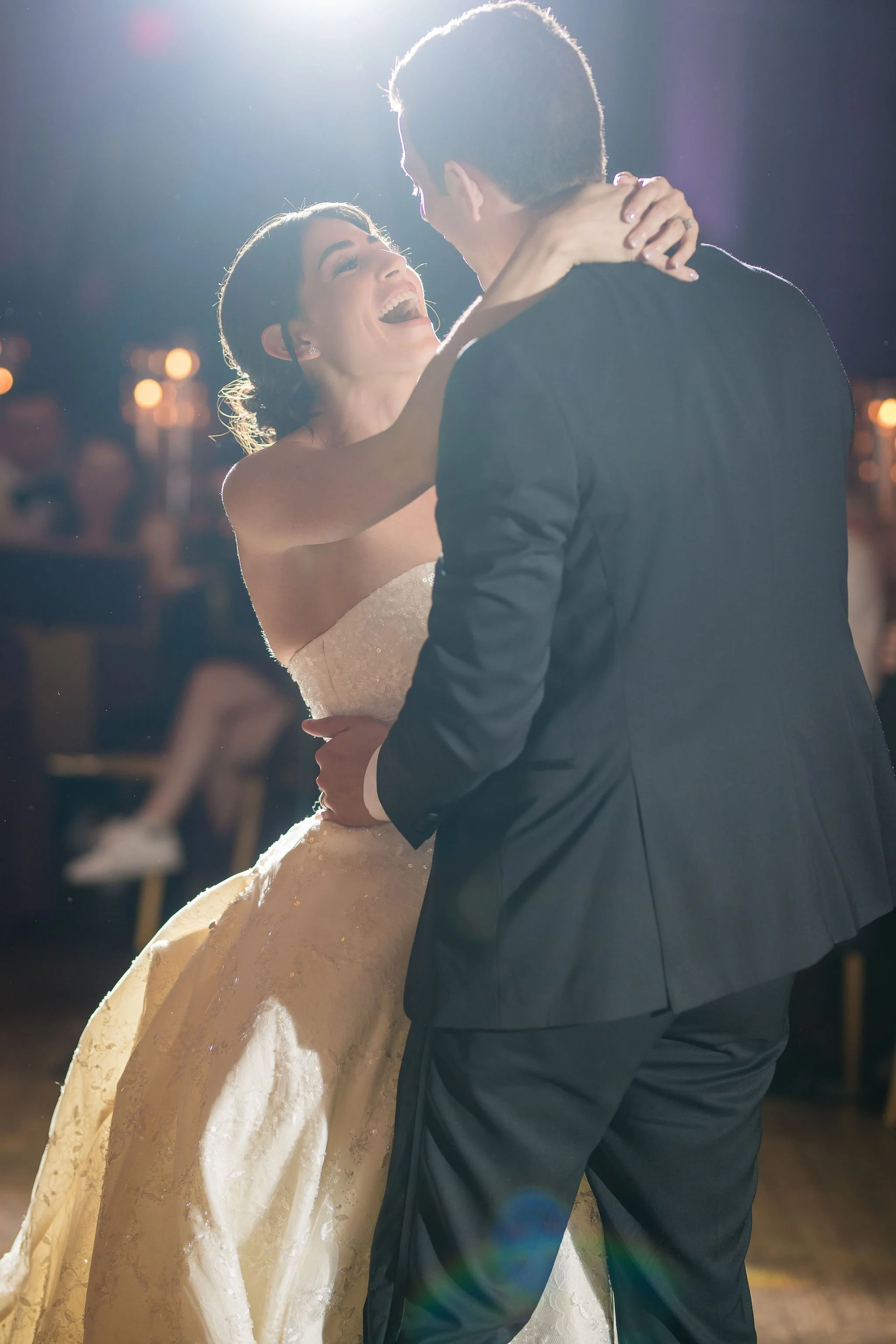
Image taken with 85mm lens at F2, flash on camera only, DJ light in the background
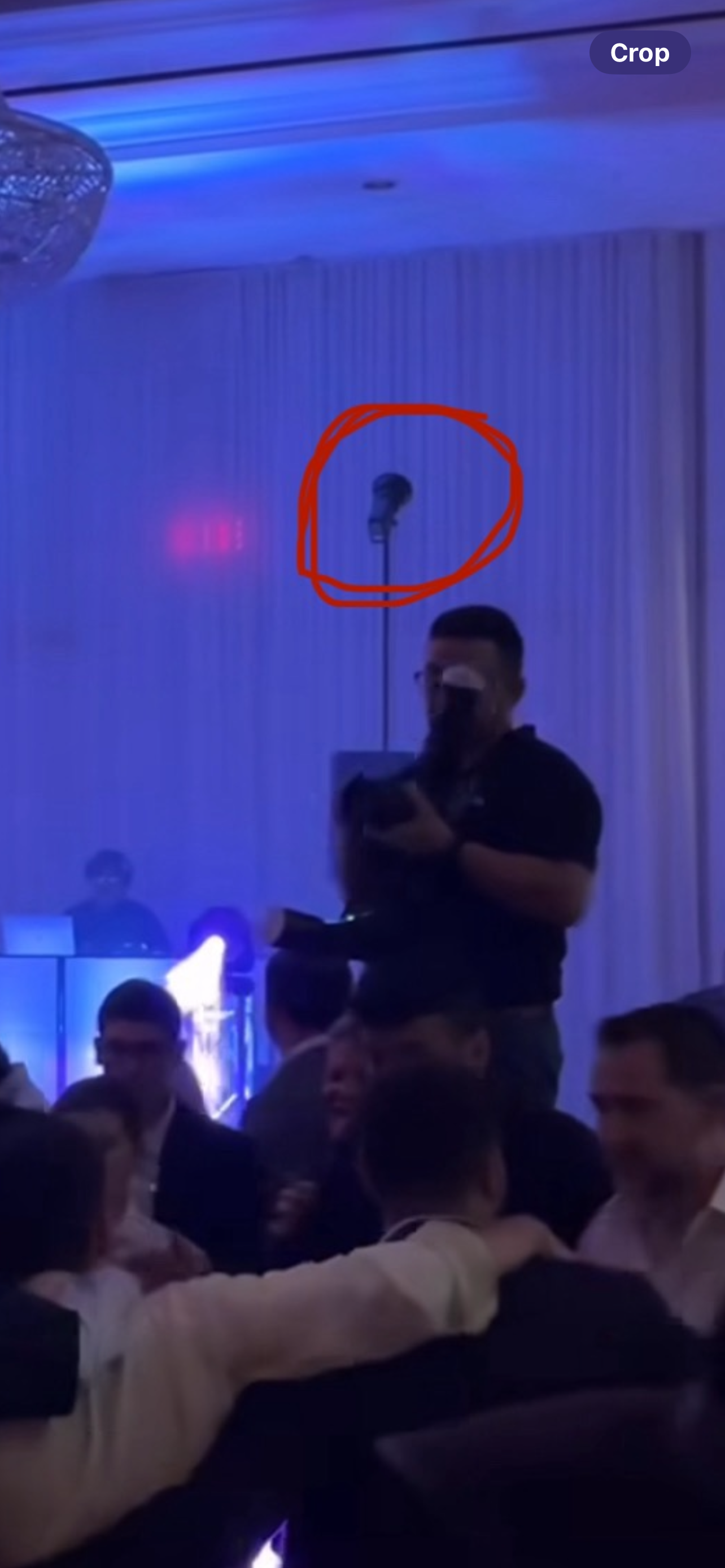
Cell phone image of AD400 highlighted in red, behind me, pointing at the corner wall behind me
Tip- If you’re short like me, a 3 step ladder is absolute gold. Get a 85mm lens 1.4 or 70-200mm lens 2.8 on your camera and you will get great candid moments, without being too intrusive while people are dancing. But if you want to go in the middle of the crowd, usually a 50mm lens, 35mm lens or 24-70mm lens will do the job.
Now, on to the other camera. It also has a speedlight on it right? That’s the speedlight controlling all the Off Camera Flashes.
Confused? Lets break this down.
Let’s start with what lighting equipment are we talking about. What Off camera flash is my speedlight controlling?
- Two AD200’s pro
- One AD400 pro (I dont always add this light, only if ceilings are supper high)
The two AD200’s are bare, the 400 has a Godox 7 inches reflector. Click here to see what this product is.
Now, some photographers use grids, diffuser panels, coloured gels, to avoid spills of lights and to match ambient. I’ve tried it and I personally don’t like how my images come out, but you are welcome to try. Maybe you will love it right? Remember. There’s more than one way of doing things. What matters is that you and your paying clients are happy.
Let’s talk placement. Sometimes use the DJ booth as a reference. When guests are dancing, they tent to dance facing the DJ or band, if there is one. So, I place my AD400 pro with the 7” Godox reflector in a wall either next to the DJ or behind him if there’s space. But always close to the wall behind me. It will be in a 13 feet lightstand. The reflector is to avoid spreading light everywhere. I want the light to go up, hit the corner behind me, and spread all around the dance floor. At the same time, opposite to where I am, on the other side of the dance floor, that’s where my two bare AD200’s are, on each corner of the dance floor, pointing down at the dance floor almost in a 45 degrees angle. But I dont always go with that third light, the AD400. No. Bar Mitzvah parties for example are usually in synagogues and the ceilings arrant usually that tall. So, the placement is different.
A put the two AD200’s next to the DJ booth, on each side of it, controlled by the speedilight in my camera, and shoot TOWARDS the DJ. Because the ceiling is low, allows me to bounce light from my speedlight and properly expose the dance floor, while keeping that extra punch those two 200’s give to the image. View images below from a recent Bar Mitzvah as example..
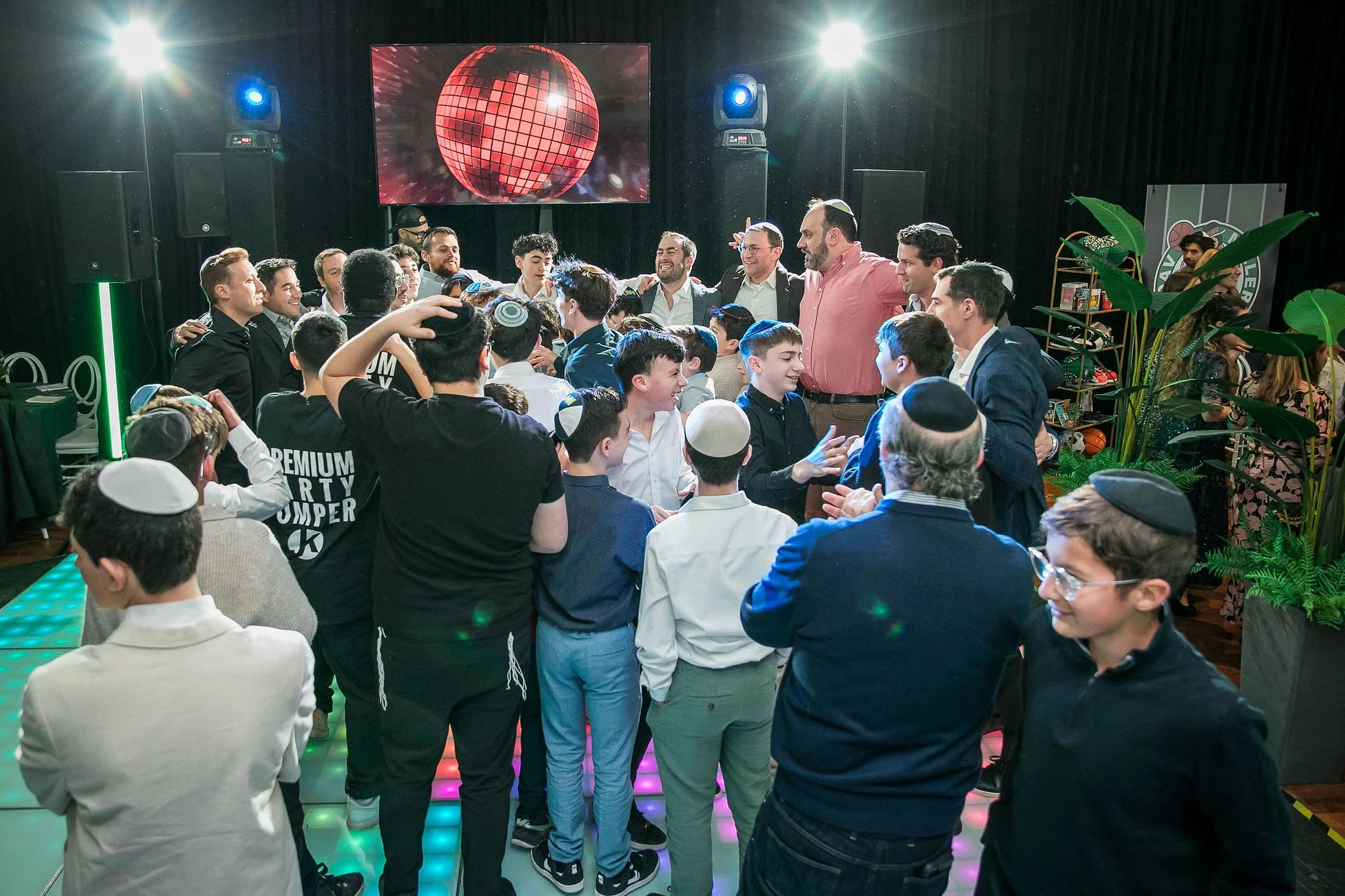
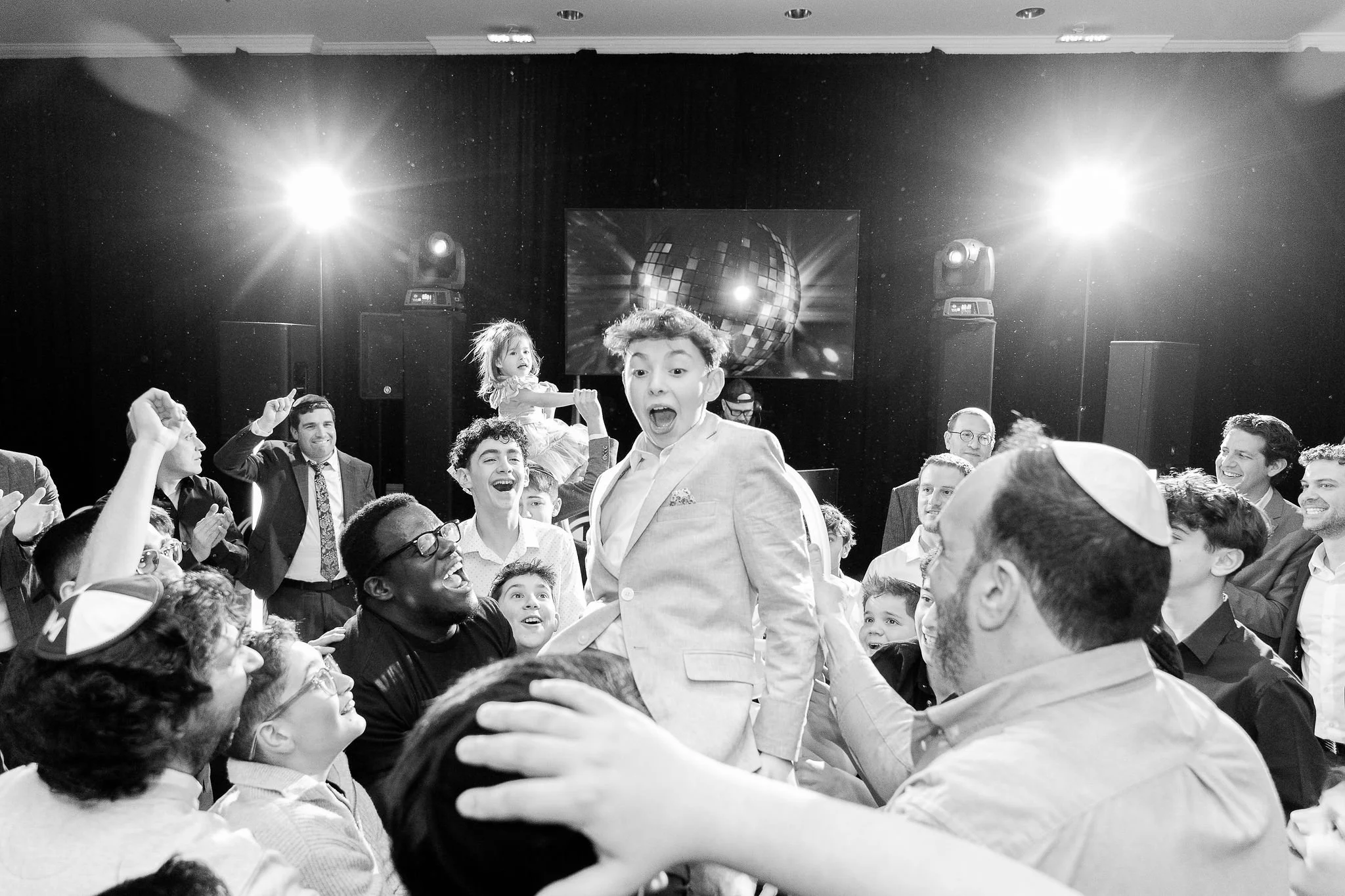
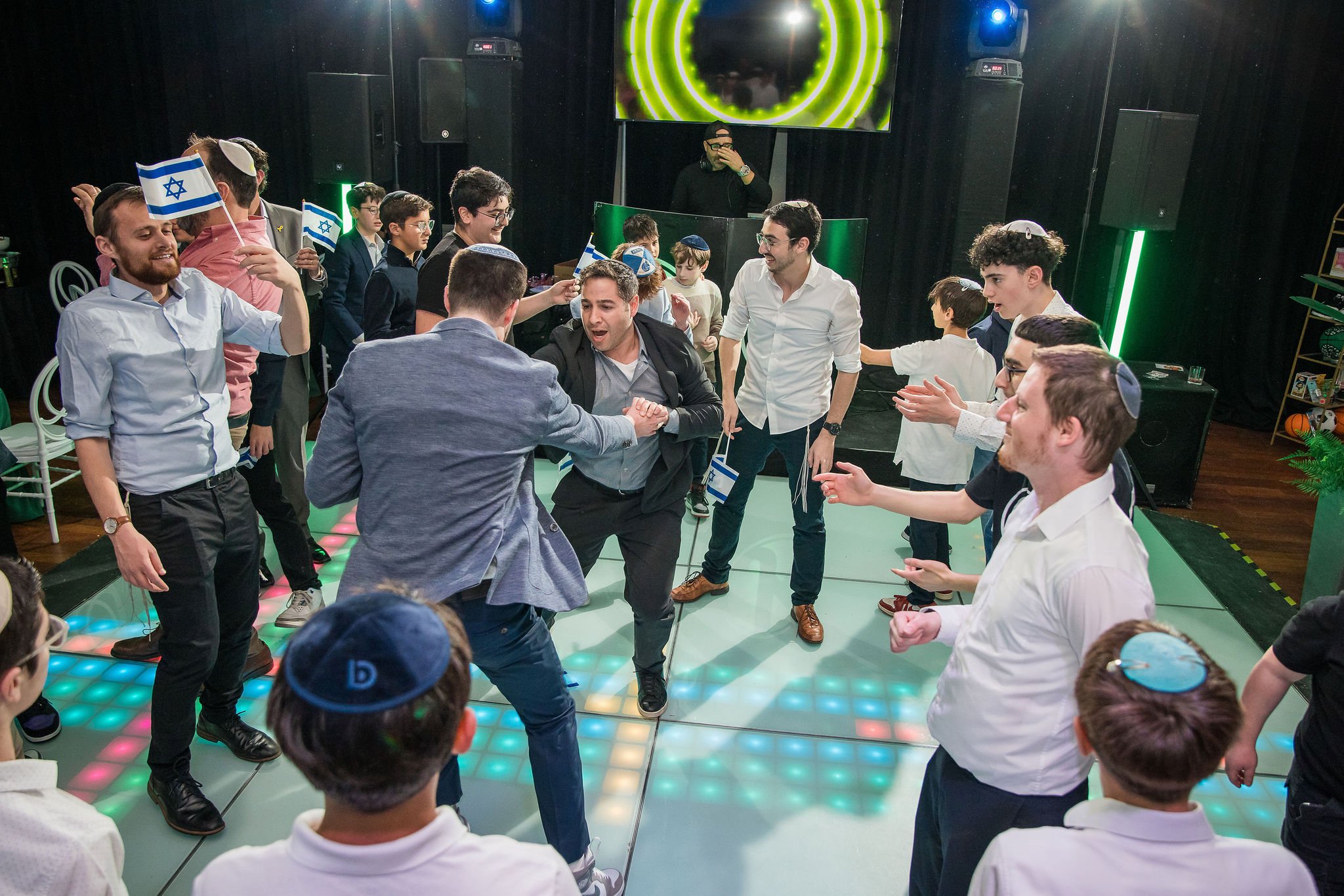
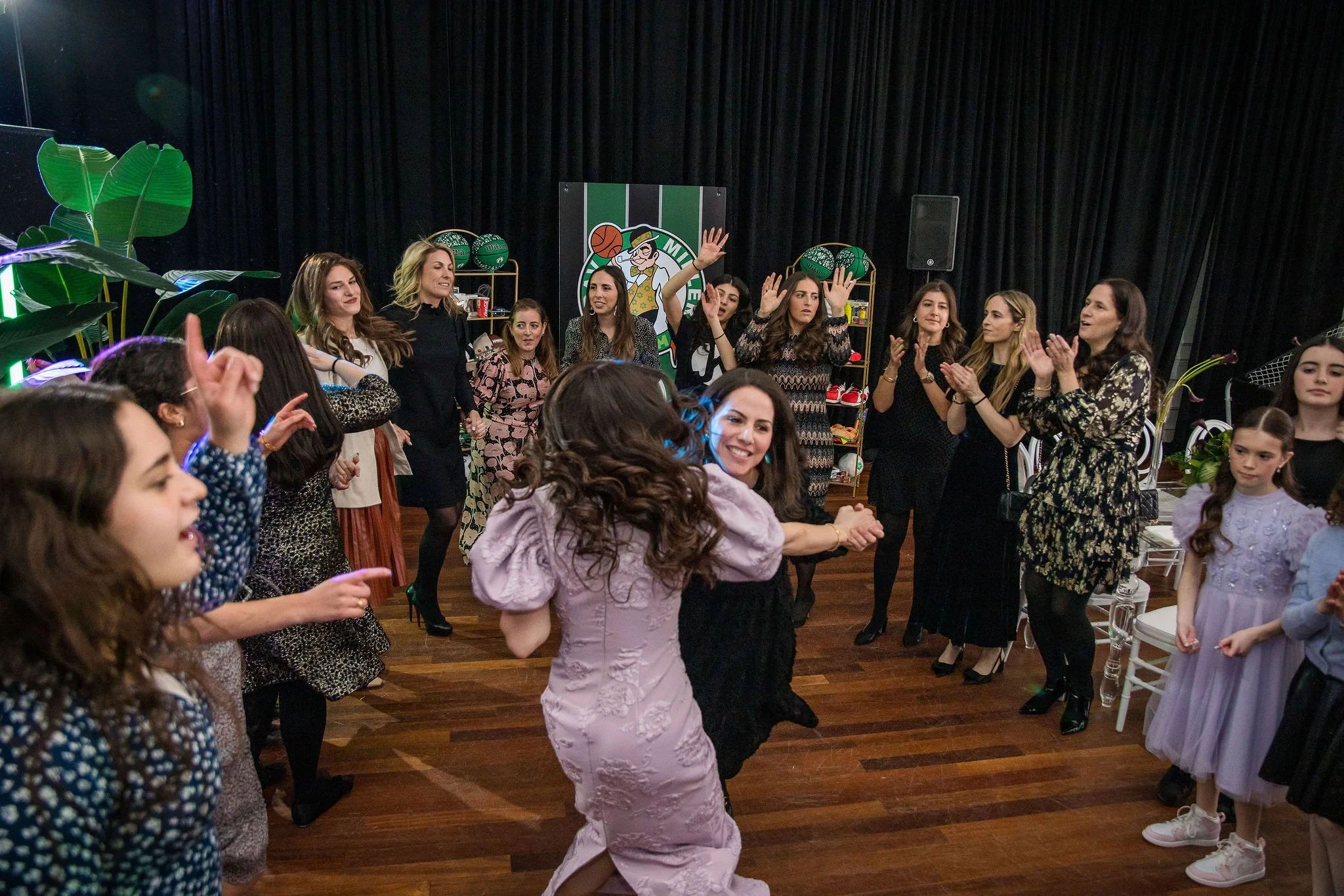
Different photographers might have different placement. Chris Vitale, a good friend of mine and a very experienced wedding photographer out of Delaware, will use 3 or 4 depending on the size of the venue, and he places his lights not around the dance floor, but on the corners of the venue, behind the tables where the guests sit down. In our Pennsylvania workshop last year, he gave a class about this. Chris has this incredibly ability to create highly contrast images and save ambient light at the same time.
For more of his work, click here.
Back to me. They are all firing at the same time, all 3 lights.
For this type of pictures, I usually use a wider lens like a 24-70, a 16-35 or a 14 mm prime. It’s the images of the all dance floor full of guests going crazy.
For settings, it may vary, but it something like F7 to F9, to create that starburst effect as the AD200’s fire, SS of 1\160 to 1\200 and ISO around 3200.
Remember, when firing this camera, the 400 watts light is always behind you. Because you dont want that hot spot of light hitting the wall, on your frame. Never shoot facing this light, always behind you. If you are not usually the 400, just a speedlight on your camera controlling the other two, then you dont have to worry about this.
What’s the purpose of this 400? Since it's behind me, the light is falling IN FRONT of me, properly exposing the hall dance floor. The speed light alone would not be able to do so, especially if it’s a big dance floor with a high ceiling. The same applies to Bar Mitzvahs,. Once a Bar Mitzvah party was held at a reception hall that used to be an abandoned church. The Ceilling was incredibly high, so that third light did wonders for me.
This also creates a high contrast image with a very dramatic feel to it. But you will be sacrificing most of ambient light tho. Which I personally don’t care much because remember, I have the other camera shooting almost wide open and high ISO
This two camera system allows me to deliver my clients two types of images of their parties. One that saves all ambient light, that they probably spent a lot of money in, with close up candids and classic looking at the camera. The other one offers a dramatic and high contrast perspective of everyone having a blast on the dance floor.
It’s very important that you get comfortable with learning and using OCF if you want to be a successful wedding photographer. Even if you never use it, having the knowledge helps, because you never know when you might need it.
Stay tuned for part 3, coming next week. Lighting set up for couple portraits and family formals on wedding days.
If you feel like this article helps, share it with your community of photographers. And don’t forget to drop a follow on my Instagram account, lots of reels there. Click here to check it out.
Can’t wait to see what you come up with using these tips.

Lighting kit for wedding photography Part 1: Ceremonies.
An educational blog about Off Camera Flash

Logo of Flashgear.net
On these next few blogs, I will dive into my personal preference for what Off Camera Flash (OCF) equipment I use for a full wedding day, as well as how I use it considering a full wedding day presents different scenarios and lighting situations.
remember, there are more than one way to achieve results. Different photographers will use different equipment and methods, this is just what works for me.
Lets start with a list of my OCF kit that bring too every wedding, as well as a link to my favourite OCF supplier.
1- Two Godox V1 pro Speedlights Click here
2- Two AD200 pro Click here
3- One AD400 pro Click Here
4- One 34” Quick Octabox the works as a soft box as well as a Beauty dish since it has a beauty dish plate Click Here
5- One 75” ULM Silver reflective umbrella Click Here
6- Three Heavy Duty Air cushioned Light Stand Click Here
7- One Godox Xpro II Controller Click Here
There’s a lot more equipment you can use, like small diffusers for your speed lights and AD200’s, just go to www.flashgear.net and have fun shopping.
Now, let’s get to the fun part. What do I use all these lights for, during wedding Ceremonies?
Let’s start with understanding that a full wedding day presents different challenges lighting wise. The same with ceremonies. Every building is different.
For example, churches can be very dark with brown wood walls, same as barns, or they can be very bright with big windows and white walls.
So what to you do if you are presented with a church, barn, synagogue or any other temple, with very low ambient light?
That’s when OCF comes in handy. But first, remember to respect the location, and always ask the person in charge of the ceremony what are the rules. I have been lucky so far and have always been able to use OCF in dark ceremonies.
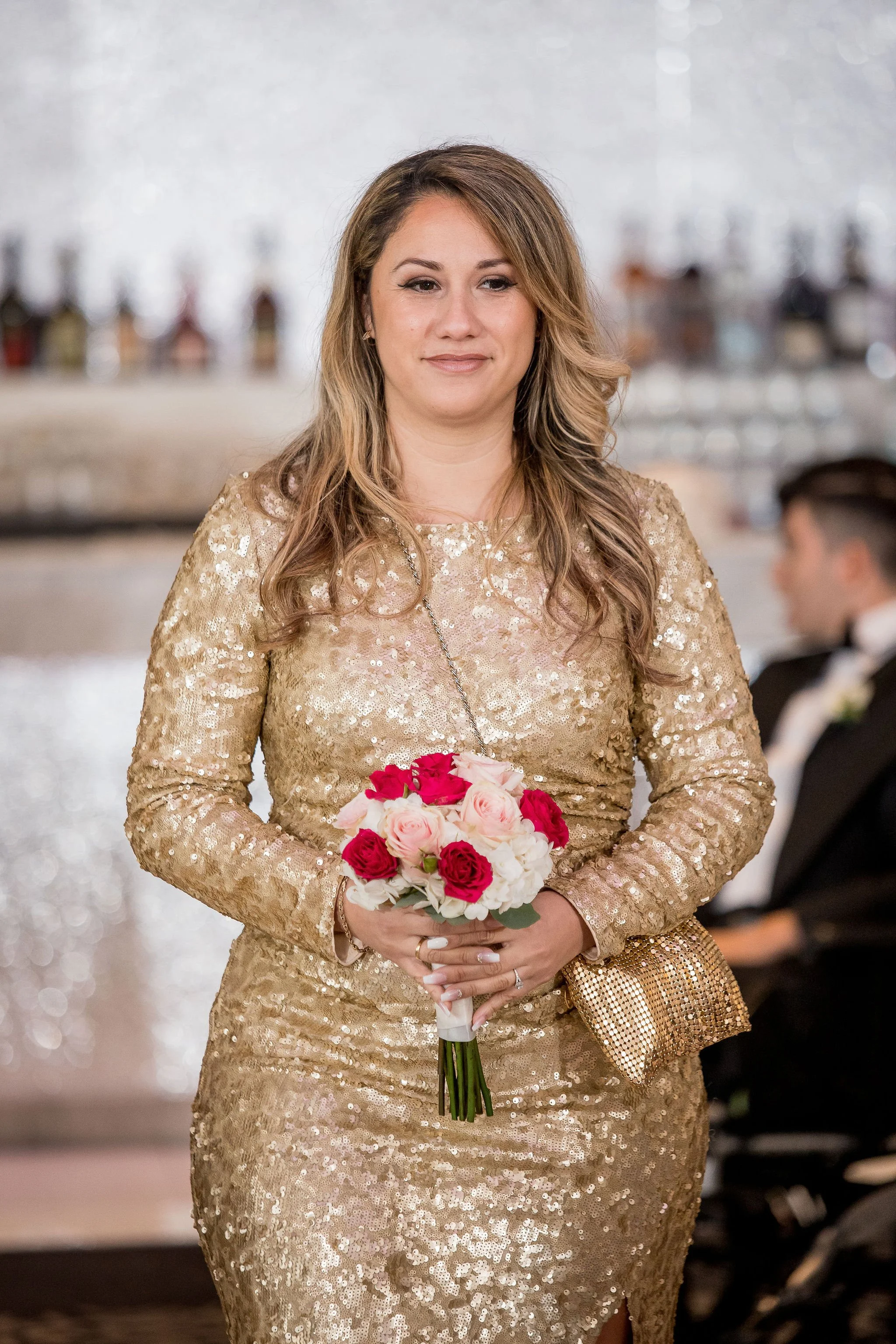
Maid of honour coming down the aisle
When bridal party (or the bride) is coming down the aisle, if it’s a small room, I always have two AD200’s Left and right of the altar, pointing at the wall BEHIND me on light stands. Why pointing at the top corner wall behind me and not straight down the aisle?
Because if it’s a small room, the light, even at its lowest power, would be too harsh . So pointing them at the wall opposite to the aisle, will make the light hit the walls, and as it bounces back, it spreads wider and by the time it hits people coming down the isle, it will be softer and less harsh. This image is a perfect example of what I mean. The two AD200’s diffused with a good dome, are pointing at the wall behind me, creating a nice and soft spill of light by the time it hits this maid of honour.
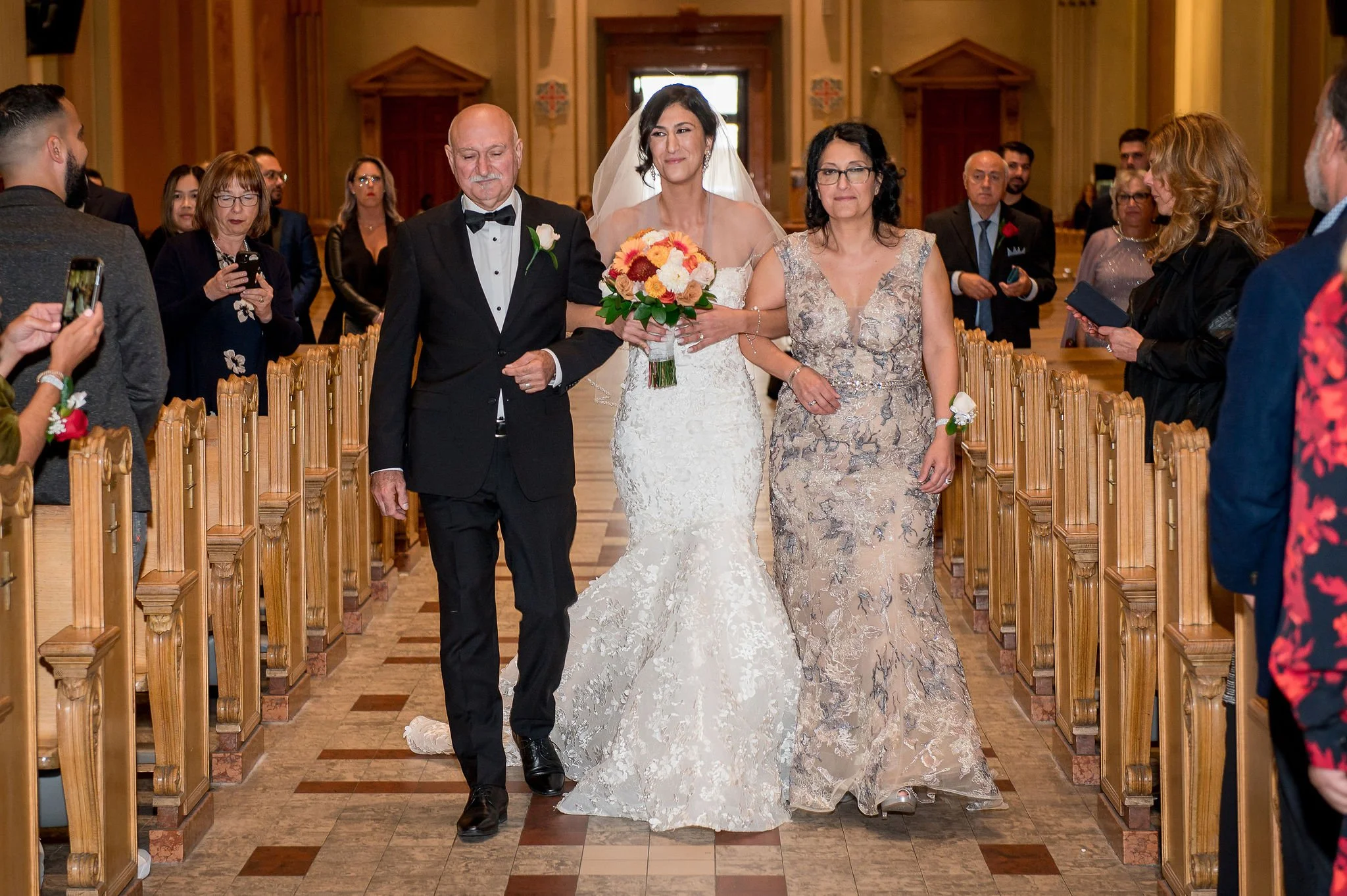
Bride coming down the aisle
Now, if its a large room, with very high ceilings and a long aisle, then I do the opposite, I point the lights straight down the aisle, at 13 feet high, diffused with a Godox Dome, to make it less harsh. This image is an example of it. Big church with super high ceilings, and a very long aisle. Two AD200’s diffused with a Godox dome, pointing straight down the aisle. The bride and her parents are properly exposed while still saving ambient light.
How do I control these lights?
I always have two cameras on me, each with a V1 Godox speed light on them.
One of the cameras has either a 85mm lens or 70-200 mm lens (Depending how big is the idle). That camera has the speed light controlling the OCF (The two AD200’s). The purpose is to have good light for when they are the further away from me, as they start coming down the aisle.
The other camera has a 24-70 mm lens. The speed light on that camera isn’t controlling any off, its just for when the bridal party gets closer to me and the speed light on my camera is enough to properly expose them.
Both Cameras always have high enough ISO to save ambient light. Some photographers even use coloured gels and adjusted Kelvin scale to match ambient light, but that’s a conversation for another blog.
During the ceremony, always trying to be the least disruptive as possible, have an assistant who’s only job is to work with the lights so that you can keep your focus on what’s happening in front of you. Try to adjust the lights in different angles, always to get perfect and soft light, when the couple is up on the altar. Walls are great light reflectors or just for bouncing, use them. Don’t point lights straight at the couple in the altar, they won’t enjoy it as its highly distracting, always bouncing off of walls.
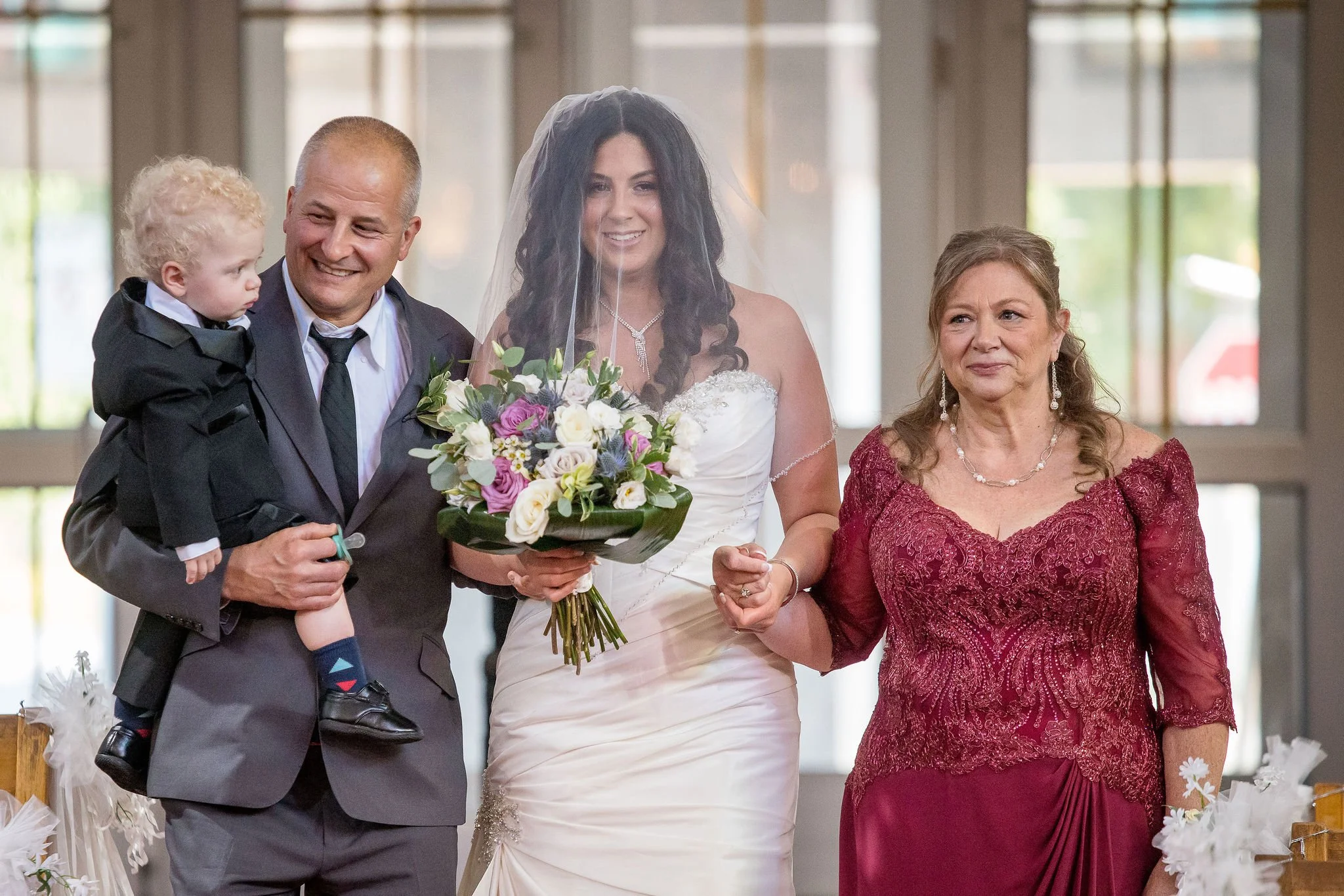
A bride an her parents
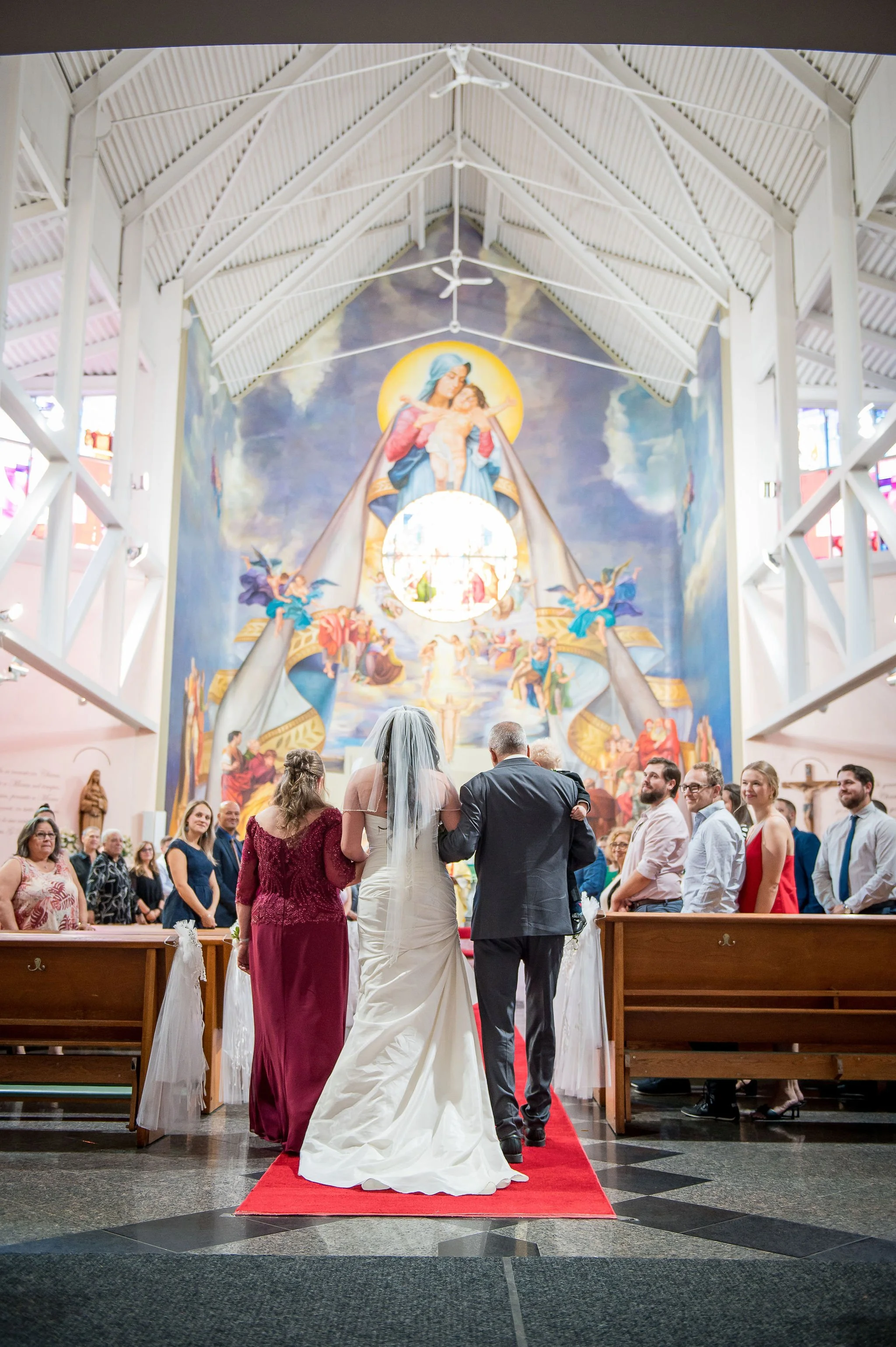
But…
If it’s a building with a lot of natural light, big windows and white walls, you absolutely don’t need any kind of OCF, just flash on camera and enough ISO. In these two images (right and above) this church had white walls, big windows and a lot of ambient light, so I only used speed light on my camera for a bit of fill, and high ISO high enough. Keep it simple people, don’t do more than what you have to.
Next Tuesday, I will talk about my Reception Setup, where I mix the two AD200’s with a AD400, all controlled by one of my V1 speedlights.
For more tips and examples of my work, check my Instagram here
You can also join my Facebook educational group here
Drop a comment below and let me know what you think, and stay tuned for next week’s blog about lighting reception rooms

How to Create a Wedding Photography Timeline (And Not Crash and Burn)
How to work together with your clients and planners, establishing a functional and stress free wedding pictures timeline

Restructuring wedding contracts pricing: What are the pros and cons of Percentage fee vs a fixed booking fee?
Strugling to choose between a fixed rate or percentage fee contract to present your clients? This article should help you make a final decision